Climate has always been a pivotal factor in Architectural design. Thermal comfort, energy-saving schemes, and Eco-friendly principles are required to be kept in mind while building homes to make them most comfortable for the families that reside in them. Variations in weather conditions are beyond our control, thus preparing for changes is mandatory for architects to implement while designing a space. Here are a few successful strategies that can be used during hot and dry climates:
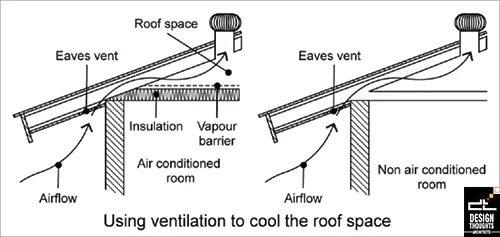
Building Design Strategies:
- Detailing building fenestration design and construction details to promote shading, heat loss, and insulation.
- Larger building dimensions should face north & south.
- Double walls with insulation in between are a suitable solution
- The size of the windows on the east and west sides should be minimized in order to reduce heat gain
- The flat roof is a good reflector and re-radiates heat efficiently, especially if it consists of a solid, white-painted material.
- The courtyard is provided with water and plants, it acts as a cooling source.
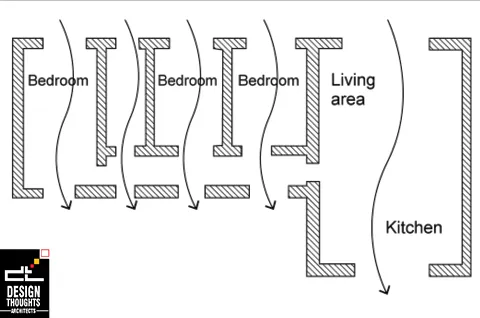
- Internal courtyards provide cross ventilation and natural cooling.
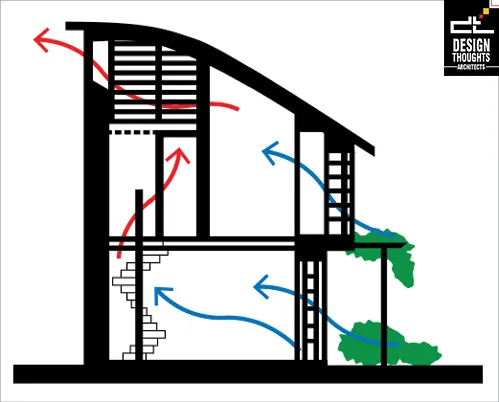
- Inlets are to be provided at lower levels and outlets at a higher level as they serve to vent the hot air.
- Suitable radiation barriers in the form of canopies, chajjas, and long verandahs should be provided on the west side of the building.

There are many states in India which has a hot and dry climate which are described below:
Rajasthan: Jaisalmer –
This is called the “Golden City” of Rajasthan. The yellow sand and yellow sandstone that’s utilized in each engineering of the city gives a yellowish brilliant tinge to the city and its encompassing regions. The Architectural style plan that is used in this is “courtyard planning”. Other cities in Rajasthan include Kota, Baran, Jhalawar, Banswara, southwest Udaipur, and adjacent areas of Mt. Abu.
Madhya Pradesh –
The places which have a hot and dry climate in MP are Gwalior, Jabalpur, Sagar, Rewa, and Singrauli.
Gujarat –
Ahmadabad is the capital which has the maximum hot and dry climate throughout summer.
Andhra Pradesh – Vijayawada, Khammam, and Thallarevu (East Godavari) are some of the southern places in AP.
In conclusion, would like to suggest a few points that one can implement for a comfortable living arrangement :
Increase greenery in your building wherever possible i.e., Balcony, Courtyard, Outdoors, Entrance, etc.
Know about the importance of the interrelation between climate and the design of the houses.
Use Eco-friendly materials that are suitable for all seasons.
How Can Building Orientation Help in a Hot and Dry Climate?
In a Hot and Dry Climate, building orientation plays an important role in reducing heat gain. Longer walls should ideally face north and south, while east and west-facing openings should be limited. This helps reduce direct solar exposure and keeps indoor spaces cooler for longer hours.
Why Are Courtyards Useful in a Hot and Dry Climate?
Courtyards work well in a Hot and Dry Climate because they bring light, airflow, and cooling into the centre of the home. When combined with plants, water elements, and shaded edges, courtyards help reduce heat build-up and create more comfortable living spaces naturally. Open transitional spaces such as courtyards, balconies, skylights, and indoor green areas can improve light, airflow, and passive cooling in homes.
Conclusion
Designing for a Hot and Dry Climate requires more than basic construction planning. It needs a thoughtful balance of orientation, shading, ventilation, insulation, greenery, and material selection. When these strategies are planned from the beginning, homes can remain cooler, more energy-efficient, and more comfortable throughout the year.
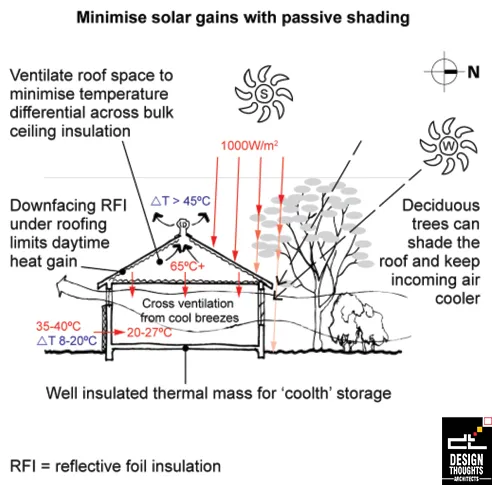
By using climate-responsive design methods such as roof ventilation, passive shading, courtyards, and controlled window placement, architects can create homes that respond better to the local environment while improving everyday comfort for the people living inside.
Frequently Asked Questions
- What is a Hot and Dry Climate in architecture?
A Hot and Dry Climate refers to regions with high daytime temperatures, low humidity, and strong solar exposure. In architecture, homes in these regions need shading, ventilation, insulation, and cooling strategies to improve indoor comfort. - Why is climate important in home design?
Climate affects how much heat, light, and airflow a home receives. Designing according to climate helps reduce heat gain, improve ventilation, save energy, and create comfortable living spaces throughout the year. - Which design strategies work best for a Hot and Dry Climate?
The best strategies for a Hot and Dry Climate include passive shading, roof ventilation, insulated walls, smaller east and west windows, internal courtyards, greenery, and controlled airflow through lower inlets and higher outlets. - How does roof ventilation help in a Hot and Dry Climate?
Roof ventilation helps release trapped hot air from the roof space before it transfers indoors. This reduces indoor heat build-up and supports better thermal comfort, especially during peak summer months in hot regions. - Why should windows be smaller on the east and west sides?
East and west-facing windows receive strong morning and afternoon sunlight, which increases indoor heat. Keeping these windows smaller or shaded helps reduce heat gain and keeps the interiors cooler for longer hours. - Are courtyards useful in Hot and Dry Climate homes?
Yes, courtyards are very useful in Hot and Dry Climate homes. When designed with plants, water elements, and shaded edges, they help improve airflow, bring in natural light, and create a cooler central space. - How does greenery help in hot and dry regions?
Greenery helps reduce heat around the home by providing shade, cooling the surrounding air, and softening harsh outdoor conditions. Plants in balconies, courtyards, entrances, and terraces can improve comfort and visual appeal. - Can passive design reduce energy use in a Hot and Dry Climate?
Yes, passive design can reduce energy use by limiting heat gain and improving natural cooling. Shading, ventilation, insulation, courtyards, and reflective roof surfaces can reduce dependence on artificial cooling systems.